Integration over space and time by melanopsin neurons
- Date: Oct 16, 2026
- Time: 02:00 PM - 03:00 PM (Local Time Germany)
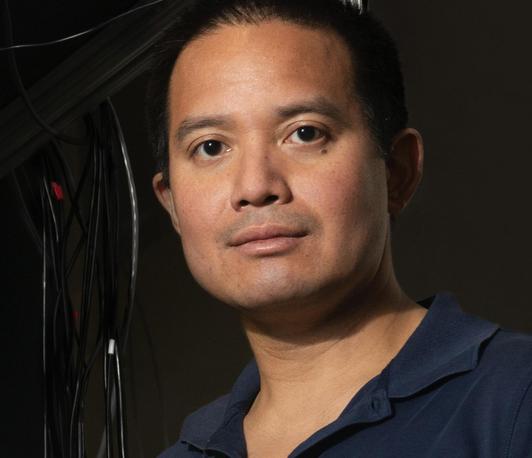
- Speaker: Dr. Michael Do
- Location: Max Planck House
- Room: Lecture Hall
- Host: Dr. Manuel Spitschan
- Contact: lucien.bickerstaff@tuebingen.mpg.de
Abstract :
The level of environmental illumination is critical information for processes that include the regulation of circadian rhythms, pupil size, sleep, mood, and cognition. In mammals, this information originates with ocular neurons that sense light with the melanopsin receptor and innervate dozens of brain regions. I will discuss how melanopsin neurons encode environmental illumination by integrating over unusually vast expanses of space and time.
Bio:
Michael Tri H. Do is an Associate Professor of Neurology at Harvard Medical School and a member of the F.M. Kirby Neurobiology Center at Boston Children’s Hospital. His laboratory explores how light drives processes that range from regulation of the circadian clock to perception. The laboratory studies light and its effects on molecules, cells, circuits, and the animal. Michael’s postdoctoral work, with King-Wai Yau (Johns Hopkins University School of Medicine), concerned neurons in the eye that sense light with a molecule called melanopsin. His doctoral research, with Bruce Bean (Harvard Medical School), examined how ion channels produce and regulate spontaneous activity in the basal ganglia. He conducted undergraduate research with Susette Mueller (Georgetown University Medical Center) on cancer cell biology.
Website: https://sites.google.com/site/doneuroscience/
Access to the meeting: Zoom link