Translating MRI Methods for Perfusion and Anatomy from 3T and 7T into Clinical Applications
- Datum: 22.05.2026
- Uhrzeit: 11:00 - 12:00
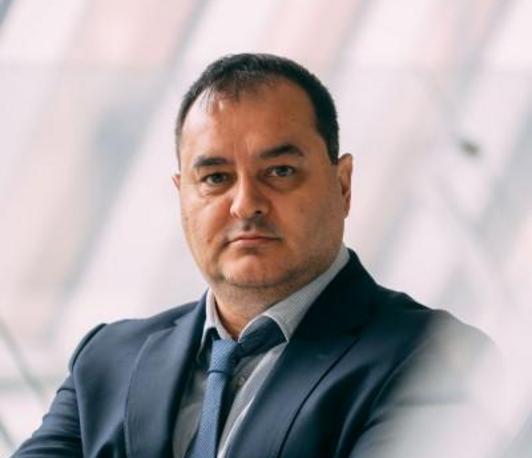
- Vortragende(r): Dr. Kâmil Uludağ
- Sunnybrook Research Institute & Department for Medical Biophysics, University of Toronto
- Ort: Max Planck House
- Raum: Lecture Hall
- Gastgeber: Dr. Klaus Scheffler
- Kontakt: tina.schroeder@tuebingen.mpg.de
Abstract :
This talk presents a translational framework bridging methodological developments in perfusion and structural MRI across 3T and 7T, with applications in brain tumors. At 3T, we have developed and validated advanced perfusion approaches, including multi-echo DSC and hybrid acquisitions, alongside quantitative structural imaging methods sensitive to tissue microstructure. Together, these techniques enable more robust and biologically specific characterization of vascular and anatomical changes, with demonstrated clinical utility - for example, in assessing tumor heterogeneity and treatment response, as well as in evaluating targeted neuromodulation and blood–brain barrier modulation following MR-guided focused ultrasound.
Building on this foundation, we translate these approaches to 7T, leveraging increased signal-to-noise ratio and susceptibility contrast to achieve high-resolution perfusion, structural, and functional imaging. This enables interrogation of microvascular and microstructural alterations even at the level of cortical layers and subcortical circuits, providing new insights into disease mechanisms. Collectively, these developments illustrate how coordinated advances across field strengths can yield precise imaging biomarkers and support emerging therapeutic strategies in neurodegenerative, neuropsychiatric, and neuro-oncological disorders.
Bio:
Kâmil Uludağ studied Physics at the Technical University of Berlin from 1992 to 1997. He completed his Ph.D. in Physics in 2003 on Near-Infrared Optical Spectroscopy (Humboldt University, Berlin) and moved for a postdoc position to the Center for Functional MRI (UCSD, San Diego, USA) to work on the physiological and physical basis of functional MRI. In 2004, he was appointed Head of Human Brain Imaging group at the Max Planck Institute for Biological Cybernetics, Tübingen. From June 2010 to December 2018, he was Associate Professor in the Faculty of Psychology & Neuroscience and Head of the Department of Cognitive Neuroscience continuing his work on the basis of fMRI utilizing the new Ultra-High Field human MRI scanners (7 and 9.4 Tesla). Since May 2019, he is Full Professor at the Department of Medical Biophysics, University of Toronto.
Access to the meeting: Zoom link